

Living Intelligence: Future of AI, Biotechnology & Smart Technology
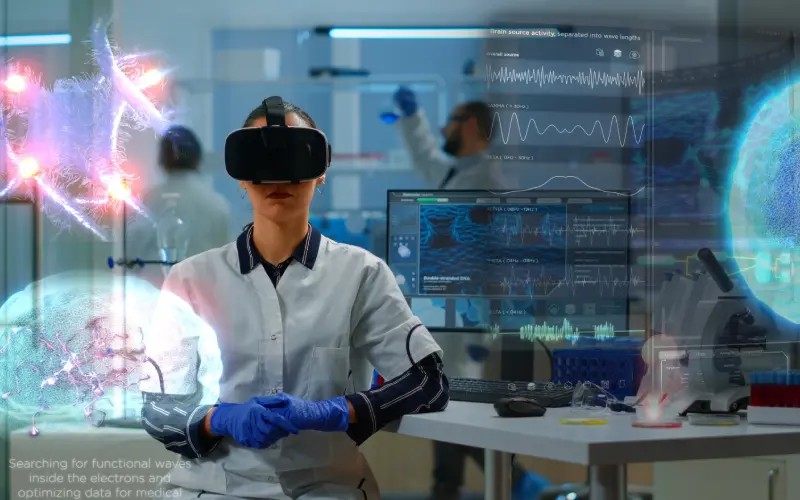
Discover how Living Intelligence combines AI, biotechnology, and sensors to transform healthcare, education, smart cities, and the future of humanity.
What is Living Intelligence?
Living Intelligence combines Artificial Intelligence (AI), biotechnology, and intelligent sensors to develop adaptive systems that learn, sense the environment, and make smart decisions.
The technologies are used together to enhance healthcare, education, smart cities, environmental sustainability, and automation in the industries.
Using the power of AI to process data, the insights from biotechnology and the real-time data from smart sensors, Living Intelligence will transform how humans relate to technology and the surrounding environment. Living Intelligence already finds its application in such industries as healthcare, smart cities, education, environmental sustainability, and high-technology manufacturing to solve complicated problems and improve human abilities.
As technology alters its face, Living Intelligence will come to play in the establishment of a future where man and intelligent systems are in harmony with each other, with a view to increased productivity, sustainability and innovation.
These systems can:
- Only data and experience can teach.
- Adapt to the environmental changes.
- Check up on real-time conditions.
- Act automatically and make smart choices.
The idea is to elevate human potential, improve societal mechanisms and increase technological innovations.
| Related Read AI and smart tech aren't just changing biology — they're transforming how businesses run their IT. → Explore: What Is the Future of IT Service in 2026? |
Applications of Living Intelligence in Healthcare
Living Intelligence is transforming healthcare with ground breaking ways of disease prevention, treatment, and diagnosis. Converging AI, Biotechnology, and smart sensors are propelling precision medicine and preventive health initiatives. Healthcare is among the most disruptive industries that can benefit from Living Intelligence.
1. Personalised Medicine
Biotechnology facilitates tailoring of treatment according to individual genetic profiles. Combined with the prowess of AI in reading vast amounts of information, medical doctors can create personalised therapies that maximise response from patients. For instance, genomic analysis through AI can detect susceptibility to disease, enabling intervention before they start.
By integrating AI-based data analysis, medical workers will be able to:
- Predict disease risks
- Create treatment plans by analysing individuals.
- Enhance patient recovery rates.
As an illustration, genomic analysis, which works with AI, may detect genetic mutations associated with pathologies, such as cancer, diabetes, or heart disease, and prevent them beforehand, allowing an individual to be diagnosed.
2. Advanced Sensors for Real-Time Monitoring
Wearable sensors providing indicators of life, such as heart rate, blood glucose, and oxygenation, provide direct information on health. AI software interprets the data to detect abnormalities, foretell medical emergencies, and suggest prophylactic interventions.
Wearables and biosensors are changing the way a patient manages his/her health.
These devices can track:
- Heart rate
- Blood glucose levels
- Oxygen saturation
- Sleep patterns
- Physical activity
The technology can be especially useful during the management of chronic diseases and the care of elderly patients.
3. Smart Automation Healthcare Environments
Robotics and automated machines governed by AI are being implemented in hospitals to assist in surgeries, inventory management, and clerical work. This reduces human error and enhances efficiency in operations.
Examples include:
- Robotic-assisted surgeries
- Computerised inventory control system.
- Artificial intelligence in medical records.
- Patient monitoring systems that are smart.
Through these innovations, doctors and nurses are able to spend more time with their patients as opposed to focusing on administrative duties.
Living Intelligence influencing Smart Cities
Smart cities are an embodiment of Living Intelligence at work. Smart cities utilise AI, adaptive systems, and sensor networks to enhance the quality of life, infrastructure, and sustainability of their citizens.
1. Adaptive Urban Systems
Intelligent technologies can be used to assist cities in better resource management.
Examples include:
- Traffic management systems of intelligence.
- Smart energy grids
- Waste management systems that are automated.
The smart grids are capable of analysing the real-time electricity demand and supply to minimise the wastage of energy and eliminate cases of power outages.
2. Human-Machine Interaction of Public Services
Smart cities combine interactive kiosks, AI chatbots, and mobile apps to assist citizens with rapid access to the services provided by the government.
With these technologies, it is possible to offer:
- To be informed about the latest transportation news in real time.
- Healthcare information
- Government services
- Emergency alerts
This will enhance accessibility and provide a more efficient citizen experience.
3. Sustainability in Urban Development
Living Intelligence helps to maintain the environmentally friendly infrastructure, such as:
- Intelligent transportation systems.
- Solar-powered buildings
- Pollution monitoring system through AI.
The technologies assist cities in reducing carbon emissions and promoting environmental sustainability.
Living Intelligence Ethical Challenges
Although living intelligence is very beneficial, it presents some serious ethical issues regarding the privacy of data, fairness, and responsible technology creation.
1. Ethical AI Decision-Making
AI applications should be ethical so that they do not make discriminatory or biased decisions.
To develop responsible AI, it will take:
- Transparent algorithms
- Diverse training data
- Human oversight
These are some of the measures that will make AI systems fair, accountable and inclusive.
2. Privacy Issues of Smart Sensors
Sophisticated sensors amass personal information.
To ensure the trust of the users, organisations should employ the following:
- Well-established data protection policy.
- Secure data storage systems
- Open user approval systems.
Ethical adoption of technology requires privacy protection.
3. Biotechnology Ethical Issues
Technologies such as gene editing and genetic engineering bring up the question of how human beings can meddle in the biological processes.
Straddling between scientific development and the moral disposition will play a critical role in determining the future of biotechnology.
The Future of Living Intelligence and Work
Living Intelligence is revolutionising industries through automated processes of repetitive work and allowing employees to concentrate on creative, strategic, and high-value work.
1. Smart Autonomous Systems in All Industries
Other businesses, like manufacturing, finance, healthcare, and logistics, are embracing intelligent systems of automation.
Examples include:
- Optimisation of supply chain through AI.
- Robotised financial fraud system.
- Robotics in manufacturing
- Artificial intelligence customer service.
These technologies enhance efficiency, accuracy and productivity.
2. Human; Machine Collaboration
Living Intelligence does not substitute the human but promotes cooperation between human beings and machines.
Artificial intelligence can help practitioners to:
- Product design
- Engineering simulations
- Scientific research
- Business analytics
Such a partnership fosters speed in innovation and problem-solving.
3. Workforce Reskilling
With the changing nature of automation, employees have to change through the acquisition of new skills.
Artificial intelligence learning can offer:
- Individualised skill development.
- Professional career learning tracks.
- On-the-fly system performance.
This helps the professionals to keep up with the technology-based economy.
Living Smart in Higher Education
Living Intelligence is changing the field of education by incorporating Artificial Intelligence, smart sensors, and digital technologies into the educational process to make it more personalised and interactive. These technologies assist the students in learning in a better way and make learning accessible to individuals of all ages.
Individualised Learning Systems
Learning platforms with AI capabilities study the learning trends of students and tailor learning material to their requirements. This will assist students to learn at their own pace and enhance learning and comprehension, and learning.
Virtual and Augmented Reality Learning
Virtual field trips, immersion simulations, and distant team collaboration are facilitated by high-end sensors and immersion. Immersive learning is achieved with the use of technologies like Virtual Reality (VR) and Augmented Reality (AR).
Lifelong Learning Opportunities
Online learning, AI teaching, and skill websites are made available to learners of any age by Living Intelligence for lifelong learning. Living Intelligence facilitates lifelong learning with online education, AI tutors and skill-development platforms that enable one to refresh his/her knowledge wherever and whenever he/she wishes.
Environmental Sustainability and Living Intelligence
Living Intelligence technologies contribute to solving such environmental issues as promoting sustainable activities, effective management of resources, and environmentally friendly innovations.
Sustainable Technology Solutions
AI can also analyse environmental data and forecast the change, and governments and organisations can limit environmental damage. Biotechnology also plays its part by coming up with environmentally friendly materials, environmentally sustainable ways of farming and biodegradable products.
Resource Optimisation, Edge computing
Edge computing is much more localised in processing data as opposed to centralised servers. This minimises power usage, network traffic and operation expenses and makes digital infrastructure more sustainable.
The Green Innovation Models of Cities
Smart cities apply AI, sensors and clean energy technologies to ensure effective resource management. Such cities minimise carbon emissions and encourage green city development.
Investment Opportunities of Living Intelligence
Living Intelligence is an emerging, rapid industry that draws international investments in the healthcare sector, infrastructure and education.
Healthcare Innovation
Technologies that help in healthcare efficiency and outcomes for patients include AI-based diagnostics, wearable health devices, and personalised medicine, which investors are investing in.
Intelligent Infrastructure
Venture capital and international investors are taking a keen interest in the startup companies in the development of smart city technologies, adaptive infrastructure, and ethical AI systems.
Educational Technology
The AI-based learning systems and virtual learning tools are generating significant opportunities in the EdTech industry.
Conclusion
Living Intelligence is the future of human and technological development. It can make smarter systems, complementing healthcare, education, environmental sustainability, and urban development through the use of Artificial Intelligence, biotechnology, and advanced sensors.
Nonetheless, ethical innovation, responsible governing, and sustainable implementation are the keys to the success of Living Intelligence. It can become a tool to boost human potential when it is carefully applied and provide a smarter, more sustainable, and globalised world.
Latest Blogs
-
 Google I/O 2025: Key Announcements, AI Breakthroughs & What It...
-
 Cyber Security and Data Protection: How will Businesses Secure their...
-
 What Is the Future of IT Service in 2026
-
Living Intelligence: Future of AI, Biotechnology & Smart Technology
Tags
- AIandBiotech
- Android updates
- CyberSecurity2026
- DataProtection
- DigitalAssetSecurity
- DigitalTransformation
- E-commerce Transformed
- FutureTech
- Google AI updates
- Google I/O 2025
- Google I/O live stream
- Google announcements 2025
- IT services
- IT services 2026
- InfoSecGlobal
- LivingIntelligence
- Shopping
- SmartTechnology
- StuffCore
- ZeroTrustArchitecture
- custom design
- designer
- developer
- future of IT services
